
I’ve had a few questions about heart rate and ‘training zones’ recently, so I thought I’d write a few words on the subject.
Starting with the basics (biology scholars, doctors or physiologists: forgive the simplification to keep it brief!). Most endurance running uses the aerobic energy system, breaking down oxygen to produce energy. Oxygen is delivered to muscles through the cardiovascular system – with the heart pumping oxygenated blood around the body. At rest, the demands are modest, so the heart will beat relatively slowly. The greater the effort, the greater the oxygen demand and the body works to deliver this oxygen faster by pumping faster; i.e. with an increased heart rate of anything up to your maximum heart rate. Resting (RHR) and maximum (HRmax) heart rates can vary significantly between individuals and there is no real good, bad or normal. There is a popular approximation of likely HRmax (220 minus your age) which is almost certain to be significantly ‘wrong’ for most people.
Why is this important? Well given that HR Zones found online, on your sports watch or in your training app are generally calculated as a percentage of HRmax, which is inaccurate, then so are those training zone boundaries. From a purely physiological point of view, training zone percentages will also vary between individuals – e.g. Zone 3 is generally accepted to be around 70-80% but again that’s an approximation. The calculated Training Zones give an approximate HR which corresponds to certain thresholds that are significant to the type of training an effort represents, e.g. Aerobic/Lactate Threshold 1 (LT1); Lactate Threshold 2 (LT2) and the ultimate limit of Aerobic exercise: VO2Max. One of the questions I received was around training zones and if they seemed to be calculated wrongly on your watch, what should they be set to? The athlete had adjusted them based on what they thought their heart rate was when they were ‘really going for it’. While these were certainly closer to reality, they are still likely a fair way off. The only failsafe way to determine HRmax, VO2max, LT1 & LT2 and therefore Training Zone heart rates is to conduct a lab test. For those interested, you can see what this looks like here or even book one yourself (expect to pay £150+ for the privilege of being caught as you collapse and fly off the back of a treadmill!)
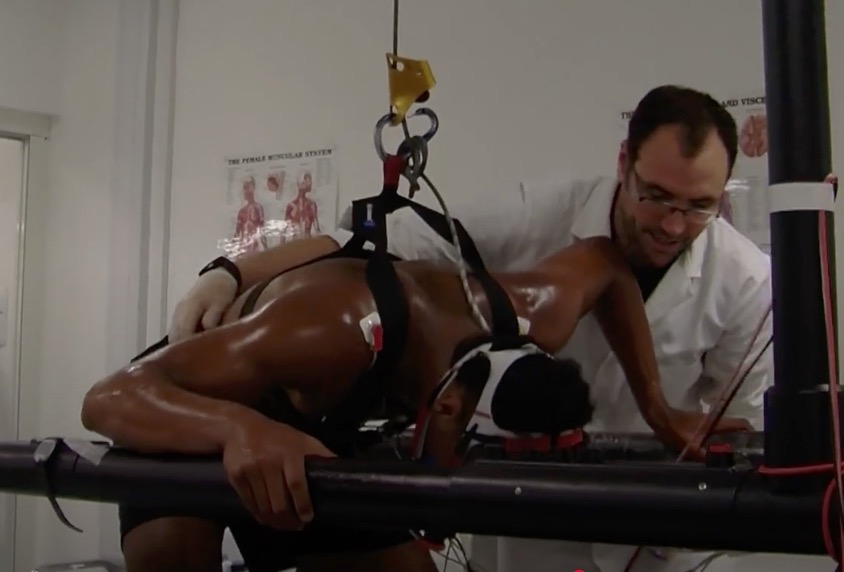
However, it’s worth noting that your results will vary over time, so it’s not a one off test that will inform your zones for evermore. It’s generally repeated periodically to see progress and remap the training zones. Now this is all very technical, and you may wonder if it’s really necessary. The short answer is: No (for most athletes). For professional and elite athletes with access to lab testing, accurate HR measurements and very precise training parameters prescribed by sports scientists – yes it’s a great aid. But for most people there’s a much easier way to estimate training intensity: Rate of Perceived Exertion (RPE). This is simply the effort you ‘feel’ you have to exert to maintain a given pace. Even easier, is the ‘Talk Test’: a method used to help most athletes determine RPE. More of that in a moment, but back to the athlete questions…
One athlete was concerned that their heart rate was ‘going too high’. First things first, unless you have a pretty serious medical condition, your heart rate can’t go too high. By definition, HRMax is as high as it will go. Of course, if you’re worried about your heart, please consult a doctor who can advise you appropriately. In training terms, however, how quickly your heart beats is a function of the oxygen demands of aerobic exercise and is one determiner of aerobic ‘fitness’. We’ve already covered how Training Zones may be way off the mark for any individual, but so can the HR measurement. Wrist or arm based HR monitors work pretty well for some people, but can be ridiculously inaccurate for others. Chest straps are generally more accurate (at least for men), but depending on positioning, chest shape and adequate skin contact (for those of us more hairy than others!) can also be inaccurate. So, we reach a situation where the Training Zone HR you’re aiming for AND the measurement of your actual HR can both be way off. Which brings me to another observation. When I asked the athlete in question why they were aiming for a specific HR, they said they’d been told that training in Zone 2 would improve their running. Now, while not necessarily bad advice, it’s not the whole picture. As a coach, I would certainly recommend that a lot of runners conduct more of their running at low to moderate intensity for a variety of reasons – more of those in another post. However, I wouldn’t tell them to run in zone 2 unless I was confident of their ability to accurately gauge they were in zone 2. And as we’ve established above, most recreational runners shouldn’t rely on generic HR zones and potentially inaccurate HR measurement. I would also be more specific about when I wanted them to exert low to moderate intensity, rather than general advice to run more in zone 2.
So how can athletes measure their training intensity without using heart rate? I mentioned RPE earlier and this is a great way to measure effort – not only does it remove the need to calibrate HR measurement and training zones, but it’s been shown in studies to be more accurate! Athletes tend to be able to measure their own effort using RPE more quickly and accurately than relying on heart rate (which can take time to climb during an interval), and it also takes into account daily and weekly variations caused by fatigue, menstrual cycle, viral infections etc. as well as moving in line with increases (or decreases) in fitness. There are different scales, but the one I’m going to use (and the one most coaches at the club use when explaining interval sessions) is the 1-10 scale. 1 is the bottom of the scale: minimal effort – e.g. a leisurely stroll and 10 is the top: maximal effort – e.g. your eyeballs out, 20-30 second sprint. A great way of estimating your RPE if this is new to you (and checking yourself even if experienced) is the talk test. This can be used to gauge your level of exertion – for example, we often use the terms ‘conversational pace’ for long runs and the three word talk test for intervals at or just above lactate threshold (LT2). Below is a table explaining the RPE and talk test for each training zone.
| Training Zone | Rate of Perceived Exertion (RPE) | Talk Test | Typical run |
| 1: Recovery/ Warmup | 1-2. Low intensity | Could talk for hours | Warmup; Recovery run; Walk/jog between intervals |
| 2. Easy/ Endurance | 3-4. Easy effort | Conversational pace. Can hold a full conversation | LSR/LSD: Long run 1-2+ hrs |
| 3. Aerobic/Steady/ Tempo1 | 5-6. Comfortably hard | Broken sentences. Can talk but only 1-2 short sentences. | Steady runs up to 1hr. >30 mins will feel moderately hard. e.g. 60-90 min race. 6-10min repetitions |
| 4. Threshold | 7-8. Hard | 3-word talk test. “Sausage, egg ‘n’ chips”. | Longer intervals (3-8mins, periods of hard intensity on tempo run. Threshold run of up to 1hr (in well trained athletes). e.g. 30min to 1hr race |
| 5. Maximum/ VO2Max | 9. Very Hard | Talking very hard. Intense effort. | Shorter intervals (1-2mins) |
| 6. Anaerobic | 10. All out | No words, maximum effort. | Sprint finish, very short sprints (20-30 seconds) |
So, in summary, here’s the takeaways:
- Keep it simple!
- Learn what it feels like to exercise at the different intensity zones: Low, Easy, Comfortably Hard, Hard & Very Hard
- Use the talk test to help (try it on a run – even solo!)
- Ignore Heart Rate and
- Talk to a coach about your training
- See a doctor about any heart concerns
- There is lots of confusion on the naming of Training Zones and different apps, resources and coaches may use different terms. A particular source of confusion is naming Zone 3 as ‘Tempo’ and Zone 4 as ‘Threshold’ as separate zones when we also have Tempo runs and Threshold runs which some people often use interchangeably. You may also see Zones 6 & 7 in some resources, however, these are not Aerobic zones. They use different energy systems; so talk tests, heart rate etc. are not useful to determine those zones. ↩︎